
Books That Resonate Over Careers
June 01, 2017
The printed word still matters. In fact, a good book can carry meaning for an educator across a lifetime. A good book conveys resonating value as potent decades later as on first reading.
School Administrator invited 15 school
leaders, most of them current superintendents, to reflect on the one book (encountered at any point during their formative years or working lives) that has carried a profound and lasting impact. Then we asked each of them to share, succinctly, how
they first came upon this work and how that book continues to influence their thinking and actions as educators.
Not surprisingly, you will discover their chosen titles range widely. Two of the 15 selected different works by the Pulitzer
Prize-winning author Thomas Friedman. Others identified works by the heavyweights of the school and organizational leadership fields, Stephen Covey, Peter Senge and Michael Fullan, while others saddled up with giants on childhood and young learning,
Jonathan Kozol and Howard Gardner. Several uncommon titles populate the list, as well 鈥� notably, Small Town Teacher and The Leadership Secrets of Santa Claus. And one of our contributors reached back in time
to her childhood introduction to The Little Prince.
This tribute to great literature and compelling nonfiction is becoming a once-a-decade ritual for us. School Administrator has twice before published a
compiled feature about books that made a difference in the lives of school leaders, in June 1998 and June 2009.
鈥� Jay P. Goldman
The Fifth Discipline. Reflection by LARRY NYLAND
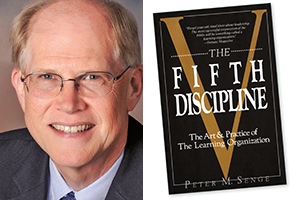
I first read the The Fifth Discipline: The Art and Practice of the Learning Organization (Currency, 1990) when it came out. Already a fan of systems learning, I was eager to learn more and actually went to Boston to meet with
author Peter Senge in his faculty office at MIT. Over the past 27 years, I have turned to Senge鈥檚 work again and again.
In each new superintendency, I use his aligned 鈥渁rrows鈥� diagram to describe how much stronger we can
be when we align around the same goals. My message to school boards is this: Four Years + Four Goals = Student Achievement. Here in Seattle, our board has kept that focus for three years and soon will renew that commitment for year four. As a result,
we continue to get clearer on our focus with the board now leading the way 鈥� asking for even more clarity and commitment.
Creative tension is another tool adopted from Senge that I use often 鈥� holding the tension between where
we are and where we want to be. Within days of starting in Seattle, I owned our opportunity gap and made my personal pledge to share the need and do everything I could to find ways to eliminate gaps. Principals partner with us in monthly professional
development and in setting individual gap-closing goals for each school. Our teacher鈥檚 union collaborates with us in supporting 31 school-based race and equity teams and in planning districtwide training on teacher-student relationships. Our
district divisions are partnering over aligning their work. Our mayor convened an educational summit and has invested millions in helping us eliminate disparities in student performance. I see evidence of collaboration in every school I visit.
Now, three years later, this creative tension between our goal (every student) and our reality (inequitable gaps) has created countless partners, all working with us to eliminate opportunity gaps. And we now have more than a dozen schools
leading the way statewide in closing those gaps. Senge鈥檚 tools and ideas have helped us in so many ways to become a stronger learning organization.
Larry Nyland is superintendent of the Seattle Public Schools
in Seattle, Wash.
The Leadership Challenge. Reflection by DARLINE ROBLES
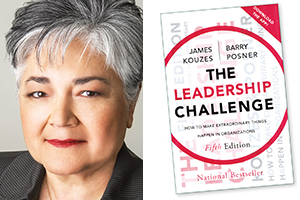
It was 1991, and I was just appointed to my first superintendent position. The school district was on the brink of bankruptcy, and staff morale was the lowest in the history of the district. As the new superintendent, it would be up to me to balance the budget and to re-establish trust with both staff and the community.
Nothing in my career had prepared me for this intense situation. During the first month on the job, a good friend sent me The Leadership Challenge (Wiley, 1987) by James Kouzes and Barry Posner. My friend asked me to read it over a
weekend and then call her.
As I read, I realized my friend not only sent me a gift, but words of wisdom to guide my new leadership journey. The book recently celebrated its 25th anniversary and its fifth edition. Over that time, I have
taken to heart the wisdom of the authors and have tried as a school leader to daily follow the five practices of exemplary leadership: Model the Way, Inspire a Shared Vision, Challenge the Process, Enable Others to Act and Encourage the Heart.
In 1991, leading from the heart, modeling the way and enlisting others to act provided the foundation for me to create a school district environment where transparency became the norm. We challenged each other to be creative and support our
students and families to make the necessary cuts to balance our budget. Within 12 months we averted a state takeover and began to rebuild our district.
Looking back, I realize the book provided me with the basics of exemplary leadership
skills. Today, as I prepare teachers to become principals and school leaders, I ask them to read The Leadership Challenge. As school leaders, we can expect to face challenges, and we must lead from a strong sense of values and beliefs
to do the right thing for our students and families. Kouzes and Posner provide the wisdom to inspire us all.
Darline Robles is professor of clinical education at University of Southern California in Los Angeles.
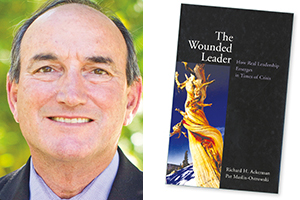
The Wounded Leader. Reflection by JEFFREY J. SMITH
Have you ever experienced the anguish that can come from harsh criticism and self-doubt? I have. It can make you feel like the world is closing in and you are alone
to face the harsh realities that come to light.
This book describes the nature of wounding experiences that can be so painful, the injuries last a lifetime. However, others don鈥檛 see this because it happens on an emotional and psychological
level. The Wounded Leader: How Real Leadership Emerges in Times of Crises (Jossey-Bass, 2002) by Richard Ackerman and Pat Maslin-Ostrowski taught me that experiencing wounding events is a natural part of leadership and that taking care
of myself is as important as taking care of others.
Wounding experiences are uncomfortable to live through, yet they also can be a call to examine the foundation of our leadership priorities. Similar to an illness, a leadership wound brings
difficulty and danger but also awareness and opportunity. The vulnerability we feel can give rise to the courage to become truer to ourselves.
Facing a wounding experience also can be a paradox. While it鈥檚 natural to avoid being wounded,
it is through the difficult experience that the open wound offers a touchstone to re-examine our meaning, purpose and identity as leaders.
When my school district was considering closing a school due to declining enrollment, the criticism seemed
to come from all directions. As superintendent, I was left to explain the financial needs of the system while also counseling the many people who would be affected personally by the closure. The more I showed concern for others, the more vulnerable I
seemed to feel.
It was at this point that I used the lessons I鈥檇 learned from
The Wounded Leader to invite others into the conversation rather than keeping them out. I realized I did not have all the answers, and I wouldn鈥檛 allow myself to be ruled by fear or driven by displays of power. Through this experience,
I found the wound was not a burden to be avoided but an ironic blessing that could lead me to become a more effective and enduring leader.
Jeff Smith is superintendent of the Balsz School District in Phoenix, Ariz.
The 7 Habits of Highly Effective People. Reflection by ROARK HORN
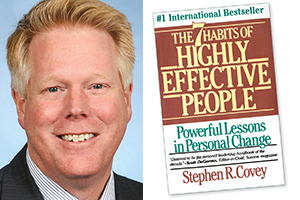
Sometimes, it鈥檚 the things you don鈥檛 see coming that have the most impact. I can remember thinking, 鈥淗ere we go again 鈥� another useless training,鈥� as I entered the first session of our school district鈥檚 mandatory professional
learning program. It was based on Stephen Covey鈥檚 The 7 Habits of Highly Effective People (Free Press, 1989), and it took place more than 25 years ago. I was a high school English teacher.
I had no idea that what I
learned that day and over the following weeks would change the course of everything I do. From the opening salvo (鈥淲e are what we repeatedly do鈥�) through the final admonishment (鈥淪awing is easier when your saw is sharp鈥�), I have
tried to follow Covey鈥檚 simple principles of beginning with the end in mind, putting first things first, thinking 鈥渨in-win鈥� and seeking first to understand.
It is that last habit that has remained the most elusive for me.
Like most people, when I don鈥檛 think of the habit, I prioritize being understood ahead of understanding. But I find that it has gotten easier with practice to listen, ask good questions and recognize that if I do a good job at both of those, then
the people I am hoping to help often find their own answers. When that happens, I feel I have reached the highest degree of effectiveness I can hope to achieve.
As our society becomes more polarized, the need for civility is as high as it has
ever been. I find it comforting that the answers to our problems may rest in teachings that, after a little dusting and with a little practice, hold the answers we need to treat all others with the dignity they deserve.
Roark Horn is
executive director of the School Administrators of Iowa in Clive, Iowa.
Savage Inequalities. Reflection by MARK T. BEDELL
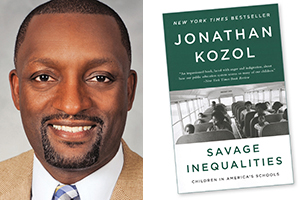
About a quarter-century ago, as a black teenager from an impoverished family in upstate New York, I picked up a copy of educator and social scientist
Jonathan Kozol鈥檚 1991 masterpiece Savage Inequalities: Children in America鈥檚 Schools (Crown, 1991). It presents Kozol鈥檚 experience teaching in an inner-city school in East St. Louis, Mo., and his conclusion that America鈥檚
educational systems and communities are unequal and structured to impede poor and minority students from achieving the American dream.
This book was a revelation for me. At that age, I could sense the walls in my world but had no framework
to make sense of it. I was angry, but had no voice.
Kozol鈥檚 work changed all that. He helped me understand I wasn鈥檛 alone. I was living through the things about which he wrote. I realized that my classmates and I were being blamed
for conditions over which we had no control. I couldn鈥檛 change that I lived in a community with endemic pollution, crime and unemployment. Kozol persuaded me to go into education so that I could become the type of highly qualified teacher that my
classmates and I needed. I was determined to provide some hope and inspiration.
Today, I鈥檓 in a position to make long-term positive change in my school system. Savage Inequalities gave me the focus to see the system
for what it is and equipped me to make the kind of structural, community-wide reforms our students need and deserve.
Mark Bedell is superintendent of the Kansas City Public Schools in Kansas City, Mo.
The Little Prince. Reflection by MARTHA BRUCKNER
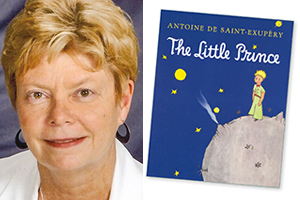
I was the oldest child of a hard-working father who was the first in his family to attend college and later served as a justice on Nebraska鈥檚 Supreme Court. He admonished me not to follow in his legal footsteps (my initial aspiration) and instead
found time to invite me outside to 鈥渓isten to the wind鈥� and wonder what else was in our universe.
Though I was much too young, my father presented me with a treasured copy of Antoine de Saint-Exupery鈥檚 book The Little Prince (Reynal
& Hitchcock, 1943). I was puzzled by the book and wondered why he would encourage me to read it. However, I have never forgotten that special invitation 鈥� and the book鈥檚 lessons.
A child鈥檚 tale, the book examines 鈥渨hat
is essential鈥� in life and espouses that the answer is 鈥渋nvisible to the eye.鈥� The little prince encounters adults who rule that the most important aspects of life are (1) what authority you have; (2) how much you are admired; (3) hiding
your limitations; (4) counting your possessions; (5) relentlessly following questionable directives; and (6) tracking mountains and oceans, while never noticing flowers. The little prince travels the world to realize that meaning only occurs when one
allows oneself to 鈥渂e tamed鈥� by caring for others.
Later in my life, my father suggested I reconsider the legal profession. By that time, though, I had been 鈥渢amed鈥� by dozens of students who helped me understand 鈥渨hat
is essential is sometimes invisible to the eye.鈥� An early 鈥� and somewhat strange 鈥� gift from my father seemed to guide my life鈥檚 work.
Martha Bruckner is superintendent of the Council Bluffs Community
School District in Council Bluffs, Iowa.
That Used to be Us. Reflection by VALERIE TRUESDALE
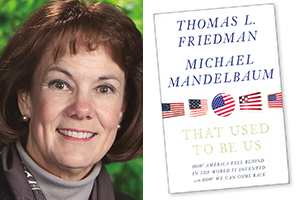
In That Used to be Us: How America Fell Behind in the World It Invented and How We Can Come Back (Picador, 2011), co-authors Thomas Friedman and Michael Mandelbaum provide an historical perspective on how America has fallen behind in
the world by straying from our own best practices. They cite four major problems, one of which is public education.
The book asserts that investing in public education is essential for economic development. I believe that deeply. In one school
district I served, we adopted the motto 鈥淓ducation is Everybody鈥檚 Business.鈥� We called upon business, civic and faith leaders and elected officials to join educators in setting higher expectations for our learners. Making the connection
between strong public education and economic growth served as a rallying point for the community.
The technology revolution and globalization of jobs have changed expectations in the workplace so that every American must be well-educated to
succeed in a good-paying job. Well-educated doesn鈥檛 necessarily require a four-year university degree, but it does mean expanding students鈥� skills to analyze, think critically and innovate to achieve individual and collective prosperity.
Friedman and Mandelbaum call for a collective response to the challenges facing America, pointing to the importance of pulling together as a nation toward higher expectations for performance. They outline five pillars of prosperity, citing the
first as providing quality public education to more Americans. I believe that is essential to sustaining a viable economy.
I consider That Used to be Us a wake-up call and a pep talk for 鈥渇rustrated optimists.鈥�
I am optimistic about the future of our youth and believe we can forge common ground. This book drives home why we must insist all our students have equitable opportunities to learn at high levels. As Americans, we may be divided right now over many issues,
but focusing on a quality education for America鈥檚 children that fosters creativity, critical thinking and collaboration should be a point upon which reasonable people can agree.
Valerie Truesdale is chief of technology,
personalization and engagement in the Charlotte-Mecklenburg School District in Charlotte, N.C.
A House Divided. Reflection by JACK MCKAY

As a superintendent in a diverse community of farmers, laborers and professionals, ranking from political progressives to conservatives, how was I going to communicate effectively with each of the groups to ensure the support our schools needed?
I found many answers in A House Divided: Six Beliefs Systems Struggling for America鈥檚 Soul (Penguin, 1997) by Mark Gerzon. His book made the case that most communities are made up of six primary groups that he termed The Religious,
The Capitalists, The Disempowered, The Media, The Environmentalists and The Government Servicers. That was a starting point for helping me consider their points of view concerning public schools.
My task as superintendent was to provide the
information that would make sense from their respective vantage points. In reading Gerzon鈥檚 work, I became more sensitive to my words and the messages I sent.
Later in my career, as a professor teaching current and aspiring superintendents,
I made Gerzon鈥檚 book a critical part of the graduate seminars. My challenge was to help my students develop strategies that would cause them to be a part of their community, to communicate well with each subgroup and to listen for understanding
of what citizens wanted and were saying.
Jack McKay is executive director of the Horace Mann League in Port Ludlow, Wash.
Frames of Mind. Reflection by TIFFANY C. ANDERSON
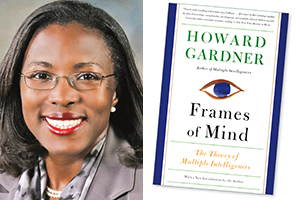
In an age when test scores are used as value judgments on schools, educators and the capacity for students to learn, the values in Frames of Mind: The Theory of Multiple Intelligences (Basic Books, 1983) by Howard Gardner remain an
even more critical piece of literature that guides my work. Reading this book reinforced my beliefs about the human experience and shaped my educational philosophy through these key points:
禄 Intelligence and human capacity cannot be
fully measured by a standardized test;
禄 The degrees to which the highest level of learning and genuine understanding occurs can be shaped by the culture individuals create using a belief in the multiple intelligence as a foundation;
and
禄 Human potential has no limits; therefore, any perceived barrier impacting learning can be removed.
Frames of Mind is about the unlimited capacity of human potential as it explores the concept of intelligence
in depth. I believe intelligence cannot be quantified by a standardized score or by a metric system. As Gardner explains, 鈥淲e confront here a question not of the certainty of knowledge but, rather, how knowledge is attained at all.鈥�
In my work in diverse, urban settings where academic deficiencies often are difficult to overcome, the belief that all students are intelligent and all students鈥� intelligence can be developed further by those they interact with and through the
instructional culture shaped around them is powerful. Reading this book for the first time as an undergraduate led me as an educator and later as a parent to become involved with New City School in St. Louis, Mo., which the book describes as a learning
culture that fully incorporates the multiple intelligences.
As a New City student teacher, I observed students making cognitive connections as teachers shaped the culture for learning by strategically creating experiences for students that
were targeting the development of the various intelligences. I watched students move from being unmotivated to learn to becoming highly engaged when experiences such as music or bodily kinesthetic activities were incorporated into lessons.
Frames of Mind continues
to reinforce my belief in the unlimited potential of the human mind, and it inspired to me publish Transforming Schools for Excellencein 2012 as a guide for school leaders.
Understanding the human learning experience for young
children and adult learners and tailoring how we teach to meet those biological and physiological needs remains a value that has shaped my approach.
Tiffany Anderson is superintendent of the Topeka Public Schools in Topeka,
Kan.
The On-Purpose Person, Making Your Life Make Sense. Reflection by DANIEL R. MOIRAO
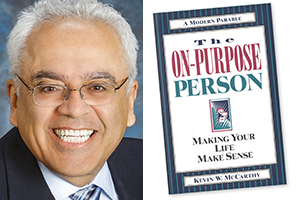
It was the best of times, it was the worst of times. So opens Charles Dickens鈥� A Tale of Two Cities. It was a time that seemed to be true of my life鈥檚 journey, personally and professionally. The trajectory toward success seemed
to come easily. Promotions came early, recognition from peers was frequent, my family was healthy, my growing family was a joy. The view from the outside looked like a picture of success.
I often was asked how I did it all. This innocent question
would send my internal self into turmoil. On the inside, I felt like I was slowly dying. I did not feel as if I could keep it together anymore and, at any moment, I was going to be discovered as the fraud I felt I was. What happened to me? Where did things
go wrong?
When sharing my life鈥檚 unrest with a trusted friend, she suggested Kevin McCarthy鈥檚 The On-Purpose Person, Making Your Life Make Sense (NavPress, 1992). McCarthy captured my interest right from the start.
Written as a fable, the opening segment told my story! I was hooked. The reader is encouraged to complete each activity as 鈥渢he man鈥� completes each 鈥� beginning with a listing of your wants, to the tournament, to the ideal on-purpose
day, and concluding with the reward: success.
Since reading this book 20 years ago, I have stopped chasing those shiny, dangling objects and have focused on my life鈥檚 purpose: making learning possible to improve lives and making opportunities
available for others.
Daniel Moirao is superintendent of the South Monterey County High School District in King City, Calif.
The Leadership Secrets of Santa Claus. Reflection by PRISCILLA A. BOERGER
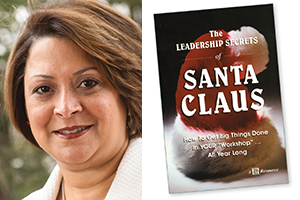
Leaders typically have a set of go-to strategies. Strategies that work so well for them they put them to use on a daily basis. They鈥檙e identifiable within the organization鈥檚 environment. The faculty and staff demonstrate similar, if not the same, strategies because the leader has shown they work. Often, posters on the wall remind people of the expected behaviors.
Sometimes, there is a unique book that hits many, if not all, of the best-laid leadership strategies. The Leadership Secrets of Santa Claus (Performance Systems Corp., 2003) by Eric Harvey, David Cottrell, Al Lucia and Mike Hourigan is just that kind of book 鈥� a great work I use to remind myself of important strategies. The authors use clever titles throughout, such as Build a Wonderful Workshop, where they discuss how to create a positive environment. In the chapter titled Choose Your Reindeer Wisely, the authors highlight the importance of selecting staff members with the right fit.
Building productive relationships, keeping a positive environment, giving credit where it鈥檚 due, listening to the team members 鈥� these are leadership strategies I value. These are values I strive to live by daily to keep my team on my team. I鈥檓 not a fan of the term 鈥渇ollowers鈥� because for me, leadership is defined by work that is accomplished together. That means people whom I lead don鈥檛 walk behind me, they walk with me, side by side. The Leadership Secrets of Santa Claus reminds me how important that is.
Priscilla A. Boerger is education department chair at Regis College in Weston, Mass.
Charting Your Course. Reflection by PATRICK K. MURPHY
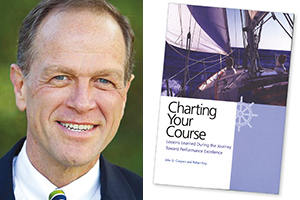
I first met John Conyers and Robert Ewy in 2005 at an education conference in Houston run by the American Productivity and Quality Center. Conyers and Ewy recently had published their book Charting Your Course: Lessons Learned During the Journey Toward Performance Excellence (American Society for Quality, 2004), which detailed how School District 15 in Palatine, Ill., undertook its journey on the Baldrige Performance Excellence Framework to achieve organizational excellence in a systematic way.
The authors tell their story using a sailing metaphor for strategic planning and the foundation of process and performance management. It鈥檚 become the 鈥渆ducation bible鈥� for my work in two school divisions to bring about a change management process and a consistent and evident feedback loop. The latter uses the Plan, Do, Study, Act framework adopted by Malcolm Baldrige to show how change is managed, while simultaneously conveying high expectations in creating opportunities and choices for all students to achieve.
One element that resonates throughout this book is connected to effective strategic planning. It鈥檚 the importance of charting a course of progress that can be continuously monitored, evaluated and adjusted. Conyers and Ewy recognize the nature of continuous improvement to build system maturity that becomes evident through growth, progress and capacity building among individuals and the organization as a whole.
The authors bring these aspects to life in their story and, more importantly, provide us with the tools to replicate these practices. The best part in applying this framework is that it works in small and large school divisions, bringing about organizational alignment coupled with a framework to create effective systemic change.
Patrick Murphy is superintendent of Arlington Public Schools in Arlington, Va.
The Moral Imperative of School Leadership. Reflection by GREGORY E. THORNTON
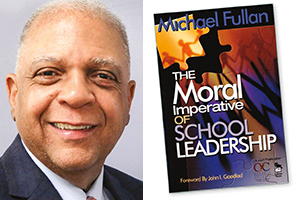
I began my career in public education during a time I refer to as the Imperial Period. Teachers were the lords and ladies of their classrooms with principals functioning as the counts and countesses of their domain. Superintendents were the kings and queens of the kingdom. Attention focused on local concerns with little sharing of knowledge, expertise and experience across classrooms, schools and communities.
Over the years, many attempts have been made at school reform, mainly centered on curricular approaches, school design (remember open classrooms?) and school configurations. We encouraged teachers to work in teams, but silos ruled the landscape.
In The Moral Imperative of School Leadership (Corwin, 2003), Michael Fullan makes the case for what he terms 鈥渃ollective enterprise,鈥� with all members of the community partnering to ensure quality educational programs. The role of the principal shifts from leading the school to developing leadership within the school community.
Fullan takes this collective model beyond the schoolhouse to administrators, policymakers and the wider community, calling for a systemic approach to leadership development and implementation. This notion is what influenced me throughout my career. I wanted not to be part of a monarchy but to help create a democratic community with shared responsibility and accountability.
But what spoke to me the most and resonates even stronger today is Fullan鈥檚 commitment to a 鈥渕oral imperative鈥� in our work as leaders. To quote him: 鈥淢oral purpose of the highest order is having a system where all students learn, the gap between high and low performance becomes greatly reduced and what people learn enables them to become citizens and workers in a morally based knowledge society.鈥�
Today we call this equity. The challenge for leaders is creating and sustaining the sort of system that Fullan describes to ensure that equity can prevail.
That is a moral imperative of leadership.
Greg Thornton is a national resident faculty adviser with the National Institute for School Leadership in Washington, D.C.
Small Town Teacher. Reflection by ROBERT CLARK
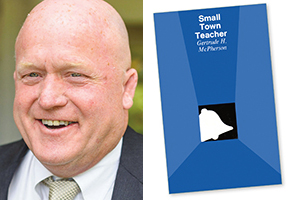
The Small Town Teacher by Gertrude McPherson (Harvard University Press, 1972) is a sociological examination of a year in the life of a teacher in a small community in the Northeast in the late 鈥�60s. The book was an adaptation of a doctoral dissertation, and it was assigned to me to read, review and present in my first class as I pursued an administrative degree.
The book did not present a favorable outlook on the profession of teaching. It鈥檚 a rather bleak narrative. The challenge of altering that description is what attracted me to educational administration because I believed school leaders had the power and authority to increase the value, intrinsic and extrinsic, of teaching.
The ideas and anecdotes of Small Town Teacher come back to me often. The McPherson belief I revisit most often is that one of the primary goals of teachers is to enable students to have a better life or be more successful than the teacher. This is the altruism of teaching, and I cannot think of a more meritorious goal for anyone in this profession.
That said, I am still frustrated at my inability to raise the significance and value of teaching on an extrinsic (monetary) basis with the communities and legislative powers. I will keep trying. Remember how long it took the Cubs to win the World Series!
Robert Clark is superintendent of Milton-Freewater Unified School District in Milton-Freewater, Ore.
The World Is Flat. Reflection by CHRISTINE JOHNS
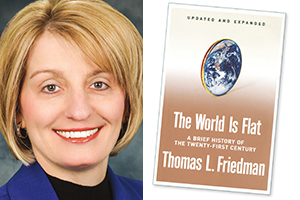
The Utica Community Schools, where I work, sit in the heart of a Michigan community that is transitioning. Our traditional automotive and defense manufacturers yearn for knowledge of high-tech, automated systems. The challenge before those of us in school leadership is how we create a college culture that values and expects postsecondary education and addresses employers鈥� demands for new skills for the global economy.
Thomas Friedman鈥檚 The World Is Flat: A Brief History of the Twenty-first Century (Farrar, Straus and Giroux, 2005) spoke to me like few other works. His book inspired and informed discussions at an executive leadership book study group and a district accountability task force charged with rethinking how we were educating our students. We knew our students in Utica were arriving in their classrooms with an entirely new set of information-gathering habits and technological expectations. As such, we began redesigning our curriculum to align with our learners鈥� needs. The key was to nurture student interest while developing their knowledge and capacities to be highly adaptable and agile learners, committed to acquiring new skills and expertise.
The Utica Center for Science and Industry, which opened in 2008, illustrates how we are responding to the challenge laid down by Friedman to develop learners who are adaptable and highly skilled and are less susceptible to being outsourced in a flat world. At the center, we are engaging students in collaboration, creative and design thinking, problem solving, real-world applications and the use of industrial-grade technology. Students choose a concentrated area of study such as engineering, robotics or multimedia production with mathematics and writing integrated across the curriculum. Southeast Michigan companies provide real-world experiences through internships and mentoring.
Several years after the school鈥檚 opening, at a Friday night football game, a student approached me to say, 鈥淭hank you for CSI鈥� and went on to explain why. He said: 鈥淚 now understand how the algebra concepts I am learning at CSI connect to the real world. Because of my successful internship, my company has hired me and offered to pay my college tuition. I am so happy to have a high-tech job.鈥�
Christine Johns is superintendent of Utica Community Schools in Sterling Heights, Mich.
Author

Additional resources
Book Picks: 1998
When eight school leaders were asked by School Administrator in June 1998 to pick 鈥渂ooks that made a difference,鈥� these were the featured titles:
禄&苍产蝉辫;The Cost of Discipleship by Dietrich Bonhoeffer
禄&苍产蝉辫;Experience and Education by John Dewey
禄&苍产蝉辫;Flight of the Buffalo by James A. Belasco and Ralph C. Stayer
禄&苍产蝉辫;The Functions of the Executive by Chester I. Barnard
禄&苍产蝉辫;The Leadership Challenge by James Kouzes and Barry Posner
禄&苍产蝉辫;Leadership Is an Art and Leadership Jazz by Max De Pree
禄&苍产蝉辫;Leadership Without Easy Answers by Ronald A. Heifetz
禄 Leading With Soul by Lee G. Bolman and Terrence E. Deal
禄 The Little Prince by Antoine de Saint-Exupery
禄&苍产蝉辫;Man鈥檚 Search for Meaning by Viktor Frankl
禄&苍产蝉辫;Mere Christianity, The Chronicles of Narnia and Perelandra by C.S. Lewis
禄&苍产蝉辫;Pedagogy of the Oppressed by Paulo Freire
禄&苍产蝉辫;The Seven Habits of Highly Effective People by Stephen R. Covey
禄&苍产蝉辫;The Soul of the Firm by C. William Pollard
禄&苍产蝉辫;Waiting for a Miracle by James P. Comer
Book Picks: 2009
When School Administrator in June 2009 invited nine leaders to describe a book that continued to resonate in their lives, these were the choices:
禄&苍产蝉辫;Don鈥檛 Think of an Elephant by George Lakoff
禄&苍产蝉辫;Execution: The Discipline of Getting Things Done by Larry Bossidy and Ram Charan
禄&苍产蝉辫;The Fire Next Time by James Baldwin
禄 Future Shock by Alvin Toffler
禄&苍产蝉辫;The Leadership Moment: Nine True Stories of Triumph and Disaster and Their Lessons for Us All by Michael Useem
禄&苍产蝉辫;Leadership Without Easy Answers by Ronald A. Heifetz
禄&苍产蝉辫;Learned Optimism: How to Change Your Mind and Your Life by Martin E.P. Seligman
禄&苍产蝉辫;Tongue-Fu!: How to Deflect, Disarm and Defuse Any Verbal Conflict by Sam Horn
禄&苍产蝉辫;A Whole New Mind: Why Right-Brainers Will Rule the World by Daniel H. Pink
Advertisement
Advertisement
Related Resources


Advertisement
Advertisement